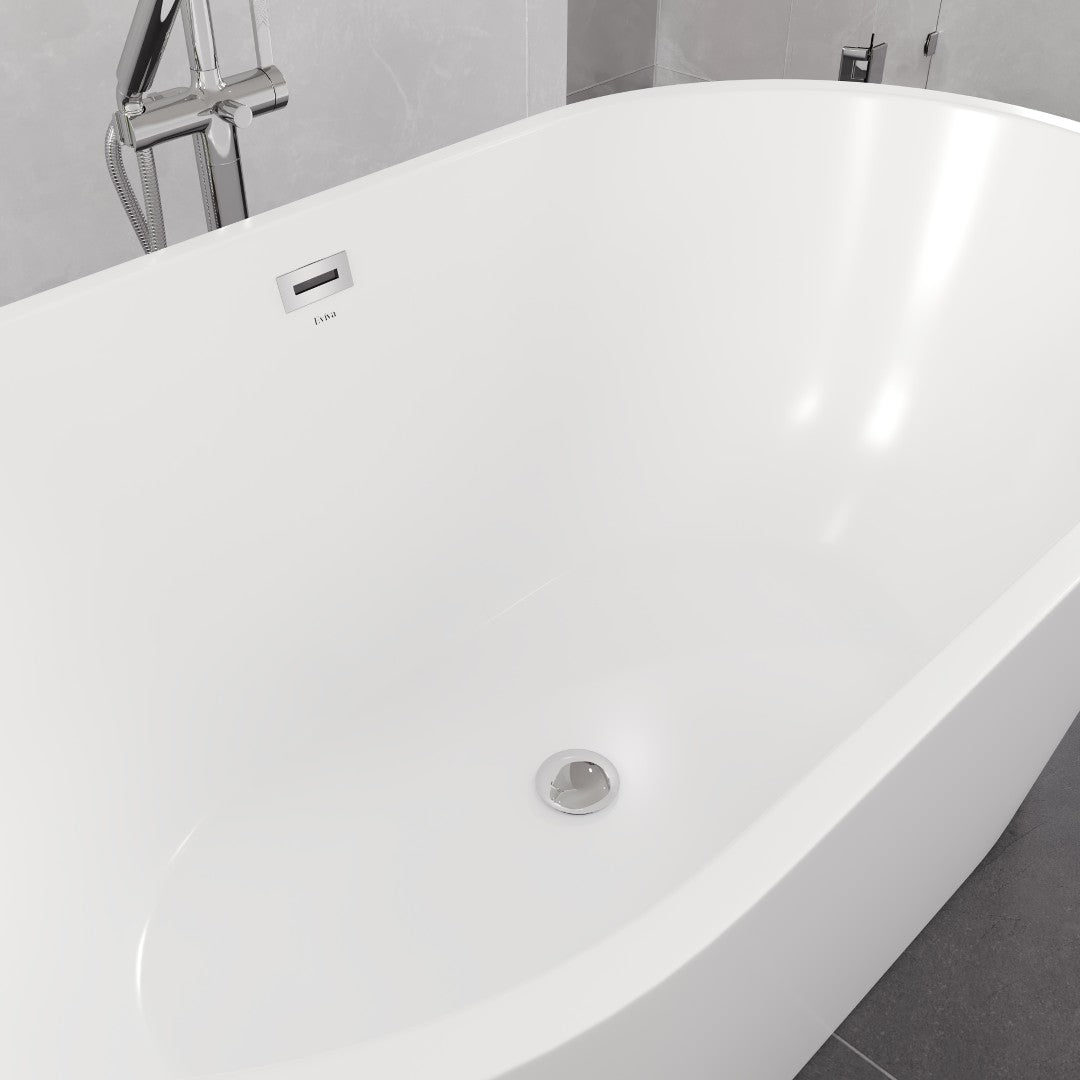
A freestanding bathtub uses more water than a shower when the water you put in the tub exceeds the showerhead’s flow rate multiplied by its running time. Count warm-up water, bath top-ups, and any rinse afterward before deciding which uses less; the freestanding installation itself does not determine water consumption.
- Does a freestanding bathtub use more water than a shower? Actual bath fill and shower runtime determine the answer.
- EPA WaterSense showerheads use no more than 2.0 gallons per minute; check your showerhead’s rating.
- Compare water used at your comfortable soaking depth, not a bathtub’s exterior length or overflow capacity.
- Eviva DTC freestanding bathtubs suit homeowners who want a separate soaking fixture; confirm capacity before choosing.
Does a freestanding bathtub use more water than a shower?
Compare gallons per bath with gallons per shower—not a tub’s appearance with a shower’s appearance. A bath uses a collected volume of water. A shower keeps using water for as long as it runs.
For your 2026 remodel, these are the measurements that settle the question:
| Option | Best for | How to determine water use | Advantage | Limitation |
|---|---|---|---|---|
| Freestanding bath | Homeowners who want to soak | Measure the actual fill, then include top-ups and rinsing | Water stops running once you finish filling | A deeper fill and reheating increase consumption |
| Shower | Homeowners who prioritize brief daily washing | Multiply actual flow rate by total running time | You control consumption by limiting runtime | Long showers and additional outlets increase consumption |
A tub’s listed capacity needs context. Capacity measured to the overflow is not the same as the water you use with someone sitting inside. Likewise, a showerhead’s rating does not tell you how long your household leaves it running.
Before comparing tub shapes, review these freestanding bathtub length benchmarks by size. Use exterior dimensions to plan the room, then check interior dimensions and capacity separately.
Why this matters
Choosing between a bath and a shower changes more than your floor plan. It also changes how you use water: a bath depends primarily on fill volume, while a shower depends on flow and time.
That distinction helps you avoid a common buying mistake—assuming a compact-looking tub necessarily needs less water. Interior width, basin shape, and the depth you prefer all affect the fill.
For a 2026 bathroom renovation, separate your decisions into two questions: which fixture supports your routine, and how will you control its water use? Choose the bathing experience you want, then verify the consumption rather than guessing from the design.
Shower water use: flow rate multiplied by running time
The US Environmental Protection Agency’s WaterSense showerhead guidance sets a maximum flow rate of 2.0 gallons per minute for labeled showerheads. EPA also identifies 2.5 gallons per minute as the flow rate of standard showerheads. These are US reference points for your 2026 comparison, not verified ratings for any particular product shown here.
Check the marking or documentation for your actual showerhead. Do not assign a flow rate based on whether it looks small, wide, traditional, or modern.
Shower water use = actual gallons per minute × total minutes running.
Include the time you spend waiting for the temperature to become comfortable. If the shower keeps running while you step away, that water belongs in the total too.
For a shower with more than one outlet, check which outlets operate together. A showerhead rating alone does not describe the combined flow of an overhead shower, hand shower, and body sprays running simultaneously.
Measure the routine you actually follow
Start timing when you turn on the water and stop when you turn it off. Record whether you used additional outlets and whether you changed the flow setting.
Repeat the check during ordinary use rather than deliberately taking an unusually short shower. Your remodel should reflect your household’s real habits, not a routine you follow only while measuring.
Freestanding bath water use: your fill, not the overflow capacity
For a freestanding bathtub, the useful number is the amount of water needed for your comfortable soak. A maximum capacity figure answers a different question: how much the basin holds under the manufacturer’s stated measuring conditions.
Your body displaces water when you enter. Starting with a tub filled close to the overflow leaves less room for that displacement and does not represent an efficient filling routine.
Bath water use = initial fill + additional water + any separate rinse.
Do not estimate that total from exterior length alone. A narrow, deep basin and a wider, shallower basin can have different usable volumes even when their listed lengths match.
Establish a repeatable fill level
Use a comfortable water level that stays below the overflow when you are seated. Follow the bathtub’s instructions, and avoid filling to the rim.
If you need an accurate measurement, use a suitable water meter or ask your plumber about measuring the fill. Timing the tub faucet works only when you also know its actual flow under the same conditions.
For a 2026 replacement, ask whether a published capacity is measured to the overflow and whether it accounts for a bather. Keep that answer alongside the installation drawing so you compare models on the same basis.
Why bath and shower water use varies
The comparison changes with your fixtures and habits. Focus on these factors rather than treating every freestanding bathtub or shower as equivalent:
- Actual soaking depth. A higher water level requires more water in the same basin. Choose the shallowest fill that still gives you the bathing experience you want.
- Interior basin geometry. Length, width, sloping walls, and the backrest shape affect the space water occupies. Exterior dimensions alone do not establish capacity.
- Shower flow and active outlets. Check the rated flow of the equipment you select and which outlets run together. Include all running outlets in your comparison.
- Total shower runtime. Count warm-up and pauses with the water still running. Timing only the washing portion understates consumption.
- Bath top-ups and rinsing. Adding hot water during a soak or showering afterward increases the water used for that bathing session.
Water heating is a separate consideration. Total gallons do not tell you the hot-water portion, because both baths and showers mix hot and cold water to reach your preferred temperature.
Ask your installer to check hot-water supply against the intended tub fill. A bathtub fitting through the bathroom door does not establish that your existing water-heating system supports the soak you expect.
How to compare your bath and shower before buying
You do not need a generic average to make a useful decision. You need measurements that describe your own bathroom and a consistent comparison method.
- Check the showerhead’s flow documentation. Note whether the figure applies to the whole setup or only an individual outlet. Confirm whether different spray settings change flow.
- Time the whole shower session. Include warm-up water and any period when the water runs without being used. Record additional outlets operating at the same time.
- Establish the bath’s practical fill. Use a measured fill in an existing tub, or request capacity and interior dimensions for a proposed replacement. Do not substitute overflow capacity for your intended soak.
- Include the extras. Add bath top-ups and any shower afterward. Apply the same boundary to both options so neither gets an artificial advantage.
- Compare bathing frequency. Separate an occasional soak from your daily washing routine. A fixture’s per-use consumption and your household’s total consumption are different questions.
The lower-water choice is the option that uses fewer measured gallons for the routine you actually follow. If the shower total is lower, choose it when water conservation is the priority. If your shower runs past the bath’s equivalent volume, shorten it rather than assuming it remains the efficient option.
Choosing a freestanding tub without guessing its water use
Eviva DTC freestanding bathtubs include different lengths, shapes, and materials. Those details help you build a shortlist, but none replaces a verified capacity figure or a practical fill measurement.
The following models illustrate different physical choices. This is a fit comparison, not a water-efficiency ranking.
| Model | Verified product details | Best for | Practical advantage | What to confirm |
|---|---|---|---|---|
| Aura 55-inch | Glossy white acrylic, oval, freestanding | Homeowners seeking a shorter exterior length | A shorter length to consider in your layout | Interior fit, width, depth, capacity, and installation clearances |
| Bella 72-inch acrylic slipper freestanding bathtub | Glossy white acrylic, slipper shape, freestanding | Homeowners planning around a longer tub | A longer format for your shortlist | Interior fit, capacity, floor support, and access around the tub |
A shorter bathtub is not automatically the lower-water choice. A longer bathtub is not automatically the more comfortable choice either; compare the interior basin and backrest with how you prefer to sit.


When comparing Eviva DTC options for a 2026 remodel, verify the installation drawing before committing to the room layout. Keep space for cleaning, safe entry, faucet operation, and access required by the installation instructions.
Is a short shower always better than a bath for saving water?
A 2.0-gallon-per-minute showerhead still uses water for every minute it runs; the word short does not establish a total. Compare the measured shower volume with your actual bath fill, including any extra water used during either session.
Does a smaller freestanding tub always use less water?
A 55-inch exterior length does not establish a bathtub’s fill volume. Compare interior dimensions, basin shape, and comfortable soaking depth before deciding that a smaller-looking model uses less water.
Does a faster tub faucet make a bath use more water?
A faster tub faucet reaches the same fill level sooner; it does not inherently increase the volume needed for that level. Stop filling at the intended depth, because leaving it running after that point increases consumption.
FAQ
Does a freestanding bathtub use more water than a shower?
A freestanding bathtub uses more water when its actual fill, top-ups, and rinsing exceed the shower’s total water use. Calculate shower use from actual flow rate and total running time.
How much water does a WaterSense showerhead use?
An EPA WaterSense-labeled showerhead has a maximum flow rate of 2.0 gallons per minute. Check the specific model’s documentation and include any additional outlets running at the same time.
Does freestanding mean a bathtub holds more water?
Freestanding describes the installation style, not a fixed water capacity. Basin geometry and fill depth determine how much water you use.
Should I compare bath capacity to shower water use?
Compare your actual bath fill with total shower water use, rather than automatically using the tub’s maximum capacity. Check how the manufacturer measures any published capacity.
Does taking a shower after a bath change the comparison?
Yes, a shower after a bath adds to that bathing session’s total water use. Include the rinse when comparing the session with a shower alone.
Can I choose a bathtub’s water capacity from its length?
No, exterior length alone does not establish water capacity. You also need information about the interior basin, depth, and intended fill level.
How can I use less water without removing my bathtub?
Use a lower comfortable fill, avoid unnecessary top-ups, and address leaking fixtures. For showers, limit total running time and check the showerhead’s flow rating.
One last thing
A longer soak does not consume more water unless you add water; a running shower continues consuming water throughout. That difference is easy to miss when comparing time spent bathing rather than gallons used.
Before finalizing your 2026 bathroom plan, put your shower’s flow and runtime beside the proposed tub’s practical fill. That comparison gives you a sounder answer than a broad claim that baths—or showers—always use less.