

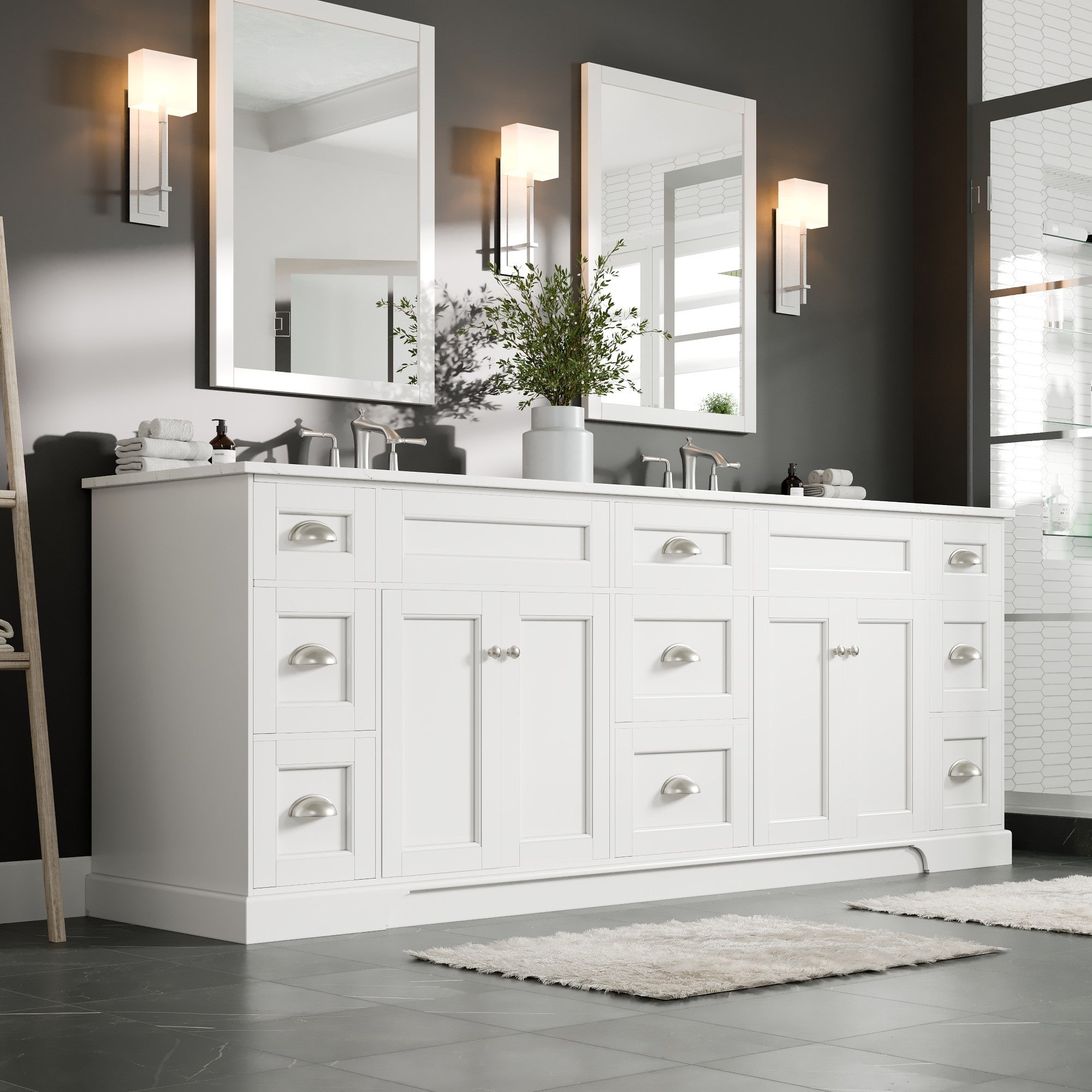
If you are planning a master bathroom remodel in 2026, you already know the stakes. Renovations can be disruptive and expensive, but the payoff is immense: you get a private sanctuary that dramatically improves your daily routine and boosts your home's equity. At the absolute center of this transformation is the bathroom vanity with a double sink.
Whether you are embarking on a complete master bathroom remodel or simply looking to upgrade your existing setup, choosing the right double vanity is the most impactful decision you will make. It dictates the flow of the room, sets the design tone, and solves everyday storage woes.
At Eviva.us, we understand that purchasing a premium vanity is a significant investment. That is why we have put together this comprehensive buyer's guide for 2026. From measuring your space to selecting the perfect countertop and hardware, here is everything you need to know to buy the perfect double sink bathroom vanity this year.
Key Takeaways
-
Baseline Space: A minimum width of 60 inches is required for a vanity with two sinks, though 72 inches is preferred for comfortable counter space.
-
Modern Height: The current industry standard is 34 to 36 inches ("Comfort Height"), which reduces back strain compared to older, lower cabinets.
-
Material Priorities: Insist on marine-grade plywood for cabinetry to withstand humidity, paired with non-porous sintered stone or quartz for low-maintenance countertops.
-
Tech & Hardware: Look for integrated power drawers to keep cords out of sight and PVD-coated hardware to prevent corrosion and tarnishing.
Why Choose a Double Sink Bathroom Vanity?
Before diving into the specifications, it is worth understanding why a double sink vanity (often called a "his and hers" vanity) is the gold standard for shared bathrooms and master ensuites.
-
Streamlined Mornings: Let’s face it—sharing a single sink during the morning rush can be stressful. A double sink vanity provides individual space for grooming, brushing teeth, and applying makeup, simultaneously cutting down on morning friction.
-
Enhanced Resale Value: Real estate trends in 2026 consistently show that prospective homebuyers look for double vanities in master bathrooms. Upgrading to a dual-sink setup is a reliable way to increase your property’s market value.
-
Abundant Storage: Because double vanities are wider, they naturally offer more under-sink storage. With modern designs maximizing every square inch through soft-close drawers and customized compartments, you can say goodbye to countertop clutter.
-
Aesthetic Symmetry: There is something inherently luxurious and visually pleasing about the symmetry of a double vanity. It anchors the room and serves as a breathtaking focal point.
Getting the Measurements Right (The Contractor's Golden Rule)

The most common mistake homeowners make is buying a vanity that looks great in a catalog but completely chokes the physical space in their actual bathroom. You have to design for clearance, flow, and comfort.
Understanding Vanity Widths
To make sizing easier, here is a quick breakdown of standard double vanity sizes and what they offer:
|
Vanity Width |
Best Suited For |
Pros |
Cons |
|
48-Inch |
Small master baths, guest baths |
Fits in tight spaces while providing two sinks. |
Virtually zero counter space; users stand shoulder-to-shoulder. |
|
60-Inch |
Average master bathrooms |
The industry standard. Good balance of counter space and footprint. |
Storage can still feel slightly limited for two heavy product users. |
|
72-Inch |
Large master suites |
Excellent counter space, abundant storage, luxurious feel. |
Requires a long, uninterrupted wall and a larger budget. |
|
84-Inch+ |
Sprawling luxury bathrooms |
Massive storage capacity, true high-end spa aesthetic. |
Heavy, difficult to move, and demands a massive footprint. |
Clearance and Flow
Do not just measure the width of your wall. You need to consider how the vanity interacts with the rest of the room. Interior design standards recommend leaving at least 15 to 18 inches from the center of the sink to any adjacent side wall. Furthermore, ensure you have at least 30 inches of clear floor space right in front of the vanity so you can easily pull out deep bottom drawers without hitting the shower glass or your knees against the toilet.
Mounting Styles: Floating vs. Freestanding
In 2026, you generally have two structural choices. Both have distinct advantages depending on your aesthetic and your bathroom's underlying architecture.
Freestanding Vanities

A freestanding vanity sits securely on the floor, typically supported by a toe-kick base or decorative legs, much like a traditional dresser.
-
The Pros: They offer the absolute maximum amount of storage space since the cabinetry extends all the way down. They are also easier to install because they do not require heavy structural reinforcement in the wall. You simply slide them into place.
-
The Look: Perfect for transitional, traditional, or modern farmhouse aesthetics.
Wall-Mounted (Floating) Vanities

Wall-Mounted (Floating) Vanities are attached securely to the wall with an open gap between the bottom of the vanity and the floor.
-
The Pros: By exposing the floor underneath, floating vanities trick the eye into making the bathroom look much larger than it actually is. They also make mopping and cleaning a breeze.
-
The Catch: You cannot simply hang a heavy 72-inch solid wood vanity on standard drywall. Your contractor will need to open the wall and install heavy wooden blocking between the studs to support the weight of the cabinet, the stone counter, and the sinks.
The Reality of Vanity Materials
Bathrooms are brutal environments. They endure rapid temperature changes, high humidity, and direct water spills daily. Buying a vanity made from cheap particle board is a recipe for peeling veneers and warped doors within a year. You want to prioritize premium construction.
-
Solid Wood: Woods like oak, teak, and walnut are incredibly durable and structurally sound. They hold screws well (which keeps hinges tight over the years) and bring an organic, earthy warmth to the space.
-
High-Grade Plywood and Moisture-Resistant MDF: If you want a smooth, painted finish (like crisp white, deep green, or navy blue), solid wood is not always the best choice because natural wood expands and contracts with humidity, which can crack the paint over time. High-quality, moisture-treated MDF or marine-grade plywood is specifically engineered to stay completely stable, ensuring your painted vanity looks pristine for a decade.
Countertops and Sinks: Low-Maintenance Luxury
The vanity top takes a beating from toothpaste, makeup, hot hair tools, and hard water. Choosing the right surface is critical for maintaining your sanity.
-
Quartz is King: In 2026, engineered quartz remains the undisputed favorite for bathroom countertops. It perfectly mimics the beautiful veining of natural marble, but because it is an engineered stone, it is entirely non-porous. It never needs to be sealed, and it will not stain if you spill liquid foundation or purple shampoo on it.
-
Natural Marble: Carrara and Calacatta marble are undeniably gorgeous and offer a classic, high-end feel. Just be honest with yourself about maintenance: natural stone is porous and prone to etching from acidic liquids. You will need to commit to sealing it annually.
-
The Sink Setup: Always opt for an undermount sink. Top-mount (or drop-in) sinks create a raised lip around the bowl that collects grime and makes wiping down the counter a frustrating chore. Undermount sinks provide a sleek look and allow you to sweep water straight into the basin.
What You Need to Know About Plumbing and Storage
Here is a detail that often surprises first-time remodelers: the plumbing under your sink eats up a massive amount of cabinet space. The P-traps and hot/cold water valves drop directly into the vanity cabinet.
To combat this, modern, well-designed vanities feature U-shaped top drawers. These drawers are built with a cutout in the center to wrap neatly around the plumbing pipes, giving you usable drawer space for makeup and razors rather than a frustrating false drawer front. When evaluating a vanity, always look at the interior photos to see how the manufacturer handles plumbing cutouts.
Can you convert a single sink to a double? Yes, but you need to budget for a plumber. You cannot simply attach a second sink to your existing pipe. A professional will need to open the wall to split the water supply lines and, more importantly, ensure the new dual-drain setup is properly vented to prevent sewer gases from backing up into your home.
Top Double Vanity Design Trends for 2026

If you want your bathroom to look current while remaining timeless, keep these interior design trends in mind:
-
Warm Wood Tones: While crisp white vanities will never completely go out of style, 2026 is seeing a massive shift toward natural, warm wood tones like bleached oak, walnut, and teak. These tones counteract the coldness of bathroom tile and bring a spa-like feel to the room.
-
Fluted and Ribbed Detailing: Texture is everything right now. Vanities featuring reeded or fluted wood panels on the drawers and doors add incredible depth and architectural interest without being overly loud.
-
Integrated Power Outlets: Say goodbye to tangled cords on the counter. The best modern vanities now feature built-in power strips inside the drawers, allowing you to keep hair dryers and electric toothbrushes plugged in and hidden away.
-
Mixed Metals: Homeowners are no longer afraid to mix hardware. Pairing a warm wood vanity with sleek matte black fixtures and brushed brass sconces creates a layered, designer-curated look.
Frequently Asked Questions
Q: What is "Comfort Height" and do I need it?
A: Older vanities were often built at 30 to 32 inches high. Today, standard "Comfort Height" is roughly 36 inches (the same height as your kitchen counters). It prevents you from having to hunch over to wash your face and is highly recommended for adult bathrooms.
Q: Do I need two mirrors or one large mirror for a double vanity?
A: Both are perfectly acceptable in 2026. Two tall, individual mirrors placed directly over each sink create a great sense of vertical height and personal space. A single, wall-to-wall mirror creates a more expansive, modern look and reflects more light into the room.
Q: How do I clean my new vanity safely?
A: Keep it simple. Avoid bleach, ammonia, or abrasive scrubbing pads. Use a soft microfiber cloth and a few drops of mild dish soap mixed with warm water to wipe down the cabinets and the quartz or marble top. Always dry any standing water immediately to protect the finish.
Conclusion: Bringing It All Together
Upgrading to a bathroom vanity with a double sink is a transformative decision that enhances both your daily routine and the long-term value of your home. By considering factors like size, mounting style, material quality, and modern trends, you can easily find a vanity that perfectly suits your lifestyle.
Make 2026 the year you finally get the master bathroom of your dreams. Browse the stunning, expertly crafted collection of double sink vanities today at Eviva.us and bring everyday luxury into your home.
Share:
Lighted vs Backlit Luxury LED Mirrors